About Stillwater Plains
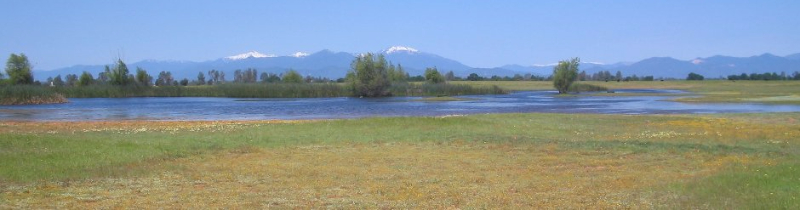
The Stillwater Plains Mitigation Bank (“Bank”) was the first multi-species, multi-habitat mitigation bank established in California. The Hawes family has owned the property on which the Bank was established since the early 1900s. The family initiated the mitigation bank planning processes with a full understanding of the ecological value of on-site historic and existing wetlands and aquatic resources, as well as a keen interest in preserving the family property for generations to come. Past agricultural land improvements and land management activities, which had disturbed or eliminated a small portion of the natural habitats located on the property, have been restored. Today, the Bank land is in “fairly pristine and defensible condition.”
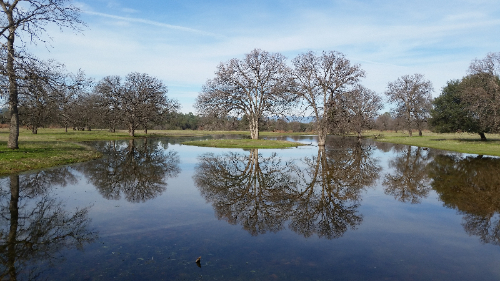
According to the California Department of Fish and Wildlife (CDFW), Stillwater Plains is the “cornerstone” to vernal pool and wetland conservation in the Redding area. In 1994, CDFW, using a study from California State University, Chico, ranked the vernal pools at Stillwater Plains as a first priority for preservation based on the high density of existing pristine pools, as well as their size variability. It is the largest, most intact, and most diverse vernal wetland complex in the region. The Bank represents the northern extent of numerous Central Valley vernal pool endemic species, many of which are listed as “threatened” or “endangered” under state or federal Endangered Species Acts.
The Bank is strategically located with respect to important aquatic resources in the California Central Valley, including numerous vernal pool-endemic special-status species. The Bank occurs east of the Redding Municipal Airport in Shasta County, California (Figure 1), and south of State Highway 44 between Deschutes Road and Stillwater Creek (Figure 2). The Bank includes seven phases (Phases I, II, III & IIIB, IV, V, VI and VII) totaling over 1,000 acres (Figure 2). Currently, Phases I, II, and III are approved and in operation (Figure 2). To date, more than 125 acres of aquatic habitats, most of which are vernal pool wetlands, have been preserved, restored, enhanced, or constructed at the Bank. Upland grasslands, oak woodlands (live, valley, and blue), and elderberry savanna habitats have been preserved and established as well.
The Mitigation Banking Concept
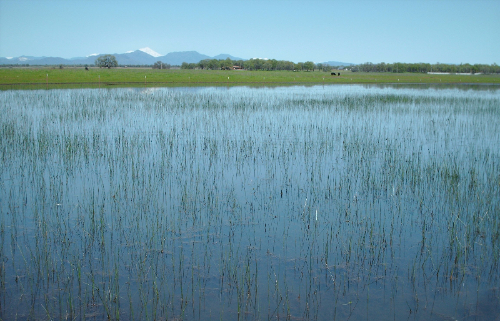
The concept of “mitigation banking” is to provide replacement of the chemical, physical, and biological functions and values of sensitive resources at a centralized “bank” location through restoration (re-establishment), enhancement (improvement), and creation (establishment) of these functions and values in lost, degraded, and new habitats, respectively. Such mitigation is intended to replace the functions and values of sensitive habitats, such as wetlands, in an efficient and cost-effective manner when they are lost as a result of authorized projects within a localized area.
Mitigation banking also encompasses the concept of preserving existing habitats, especially wetlands. Preservation is appropriate for generating credits at a bank when the wetlands or other habitats perform physical or biological functions. Preserving these functions is important to a region where extant aquatic resources are under a demonstrable threat of loss or substantial degradation due to human activities that might not otherwise be expected to be restricted.

The intended purpose of the Stillwater Plains Mitigation Bank is to:
– offset impacts to sensitive biological resources (habitats and species) from authorized activities regulated under:
– Section 404 of the Clean Water Act
– Federal and State Endangered Species Acts
– “Swampbuster” provisions under the Food Security Act
– California State Fish and Game Code
– California Environmental Quality Act (CEQA)
– local county and city ordinances within the proposed Bank service areas
(View Service Areas)
 Stillwater Plains